
Capturing Barcelona: An Artist’s Approach to Urban Landscapes and Texture
Barcelona is more than a geographic location; for a contemporary painter, it is a continuous study in architecture, light, and geometry. Creating urban landscapes requires moving beyond romanticized views and adopting an objective, analytical approach to the city's structure.
Here is a practical breakdown of how I translate the dynamic environment of Barcelona—from its historic facades to its vibrant café interiors—onto the canvas.
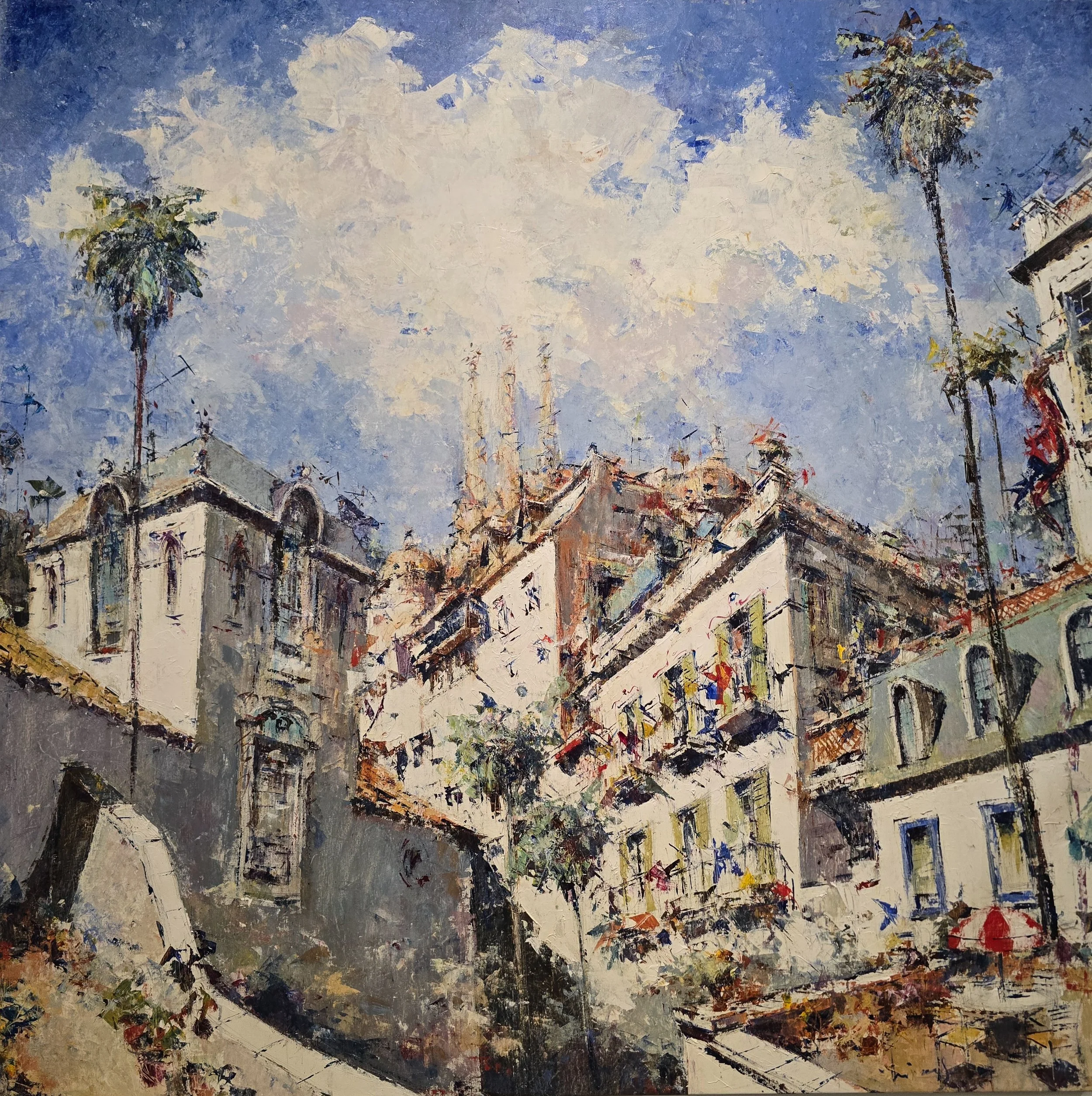
The Role of Perspective and Architectural Facades The foundation of any strong urban painting is perspective. Whether looking at the tight, shadowed alleys of the Gothic Quarter or the broad grid of the Eixample, the architectural facades dictate the structural lines of the composition. Perspective is not just an academic rule; it is the tool that creates depth and leads the viewer's eye through the streets. I focus on the rigid geometry of the buildings to contrast with the organic movement of the people below.
Technique: Why Acrylics and the Palette Knife? Capturing the essence of a stone building or a paved street requires physical texture. My process relies heavily on two elements:
Acrylic Paint: The fast-drying nature of acrylics allows for rapid layering. In urban painting, building the atmosphere requires stacking colors efficiently without losing the crispness of the underlying structure.
The Palette Knife: I use palette knives to apply thick layers of impasto. This technique is highly objective; it forces decisive, bold strokes rather than over-blended details. The edge of the knife is perfect for scraping out sharp architectural lines, cornices, and balconies, giving the painting a tactile, sculptural quality.
Transitioning to Café Interiors While the exterior facades offer structural grandness, the interior of a classic Barcelona café provides a different challenge: capturing social dynamics and artificial light. In pieces like Evening at the Café, the focus shifts to the interplay of warm interior lighting and the rhythmic arrangement of figures. The palette knife works effectively here to deconstruct the scene into essential blocks of color, capturing the energy of the room without getting lost in the minor details of faces or furniture.
Color Palette and the Mediterranean Light The atmosphere of a painting is built through a controlled color palette. The light in Barcelona demands a specific spectrum. I work with a foundational palette of deep ochres, warm siennas, and vibrant highlights to reflect the afternoon sun hitting the masonry, contrasted with cool, deep blues for the shadows cast by the narrow streets. This calculated contrast is what brings the Mediterranean atmosphere to life on the canvas.
Atmosphere and Rhythm in the Studio Painting with a palette knife is a rhythmic, almost percussive process. The physical environment of the studio plays a critical role in the final output. To maintain focus and a steady cadence during the impasto application, I rely on the sound of traditional Spanish music. The precise, energetic strumming of a Spanish classical guitar provides a steady tempo that often translates directly into the energy of the strokes on the canvas.
Ultimately, painting the city is about observing its mechanics—the light, the structure, and the sound—and translating them into a tangible texture.